
Loading...
Serving Richmond, CA and surrounding areas. (510) 660-6710
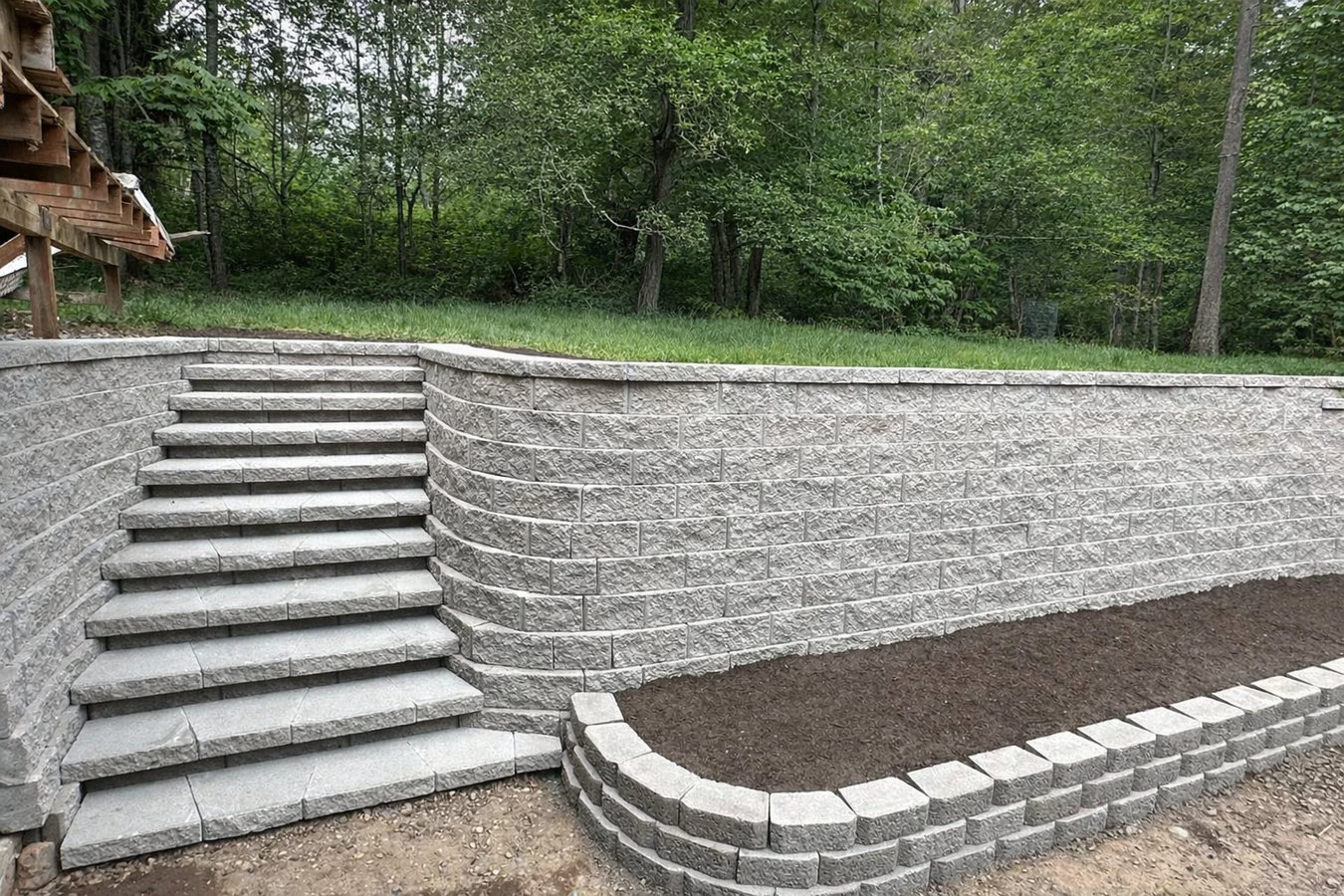
Soil washing onto your driveway every winter, a leaning wall that is one storm away from failing, or a sloped backyard you cannot use - we build walls designed for Richmond's clay soil and seismic conditions that hold for decades.
Retaining wall construction in Richmond, CA involves excavating the slope, building a compacted footing, constructing the wall course by course in concrete block or natural stone, and installing gravel backfill and drainage pipe behind the wall - most standard residential walls take three to five days of active work once materials are on site.
The part homeowners do not always think about is the drainage. Water pressure building behind a wall is the leading cause of retaining wall failure in the Bay Area. A well-built wall includes a gravel layer and perforated pipe that channels water away before it can push against the wall face. Skipping or cutting corners on drainage is the single decision that turns a 50-year wall into a 10-year problem. Walls that need extra structural depth or reinforcement - like ones managing ADU grading or terracing a steep hillside lot - also call for careful footing and base design.
For properties where the retaining wall is part of a broader yard improvement, we can connect it to masonry restoration work on existing structures at the same time. The USDA Natural Resources Conservation Service provides guidance on soil erosion and the role of retaining structures in managing hillside properties - relevant background for Richmond homeowners dealing with sloped lots.
If your retaining wall no longer looks straight when you view it from the side - if it leans away from the hillside or has a visible bulge in the middle - soil pressure has overcome the wall's ability to hold. This is especially common in Richmond's older hillside neighborhoods. A leaning wall can collapse suddenly after a heavy rain. Do not wait.
If every winter storm leaves a layer of dirt, gravel, or mulch on your driveway or lower yard, your slope is actively eroding. Richmond's rainy season is concentrated enough to move a surprising amount of soil in a single storm. A retaining wall stops that erosion at the source rather than requiring cleanup year after year.
Vertical cracks can sometimes be cosmetic, but horizontal cracks - especially ones that span the full width of the wall - indicate that the wall is bending under pressure. This is a structural warning sign. Left unaddressed, horizontal cracking almost always leads to eventual failure, and the repair cost grows with every season.
Standing water collecting at the base of your retaining wall after rain means the drainage behind the wall is not working. Water pressure is the leading cause of retaining wall failure in the Bay Area, and Richmond's clay soils hold water longer than sandy soils. Pooling water signals that drainage is clogged or was never installed correctly.
We build retaining walls in concrete block, natural stone, and brick masonry - the materials most suited to the Bay Area's seismic conditions and Richmond's clay soil environment. Every wall starts with a properly compacted footing set at the correct depth for local soil behavior. Behind the wall we install a gravel drainage layer and perforated pipe to channel water away before it can build pressure. For walls over four feet - where the City of Richmond requires a building permit - we handle the permit application and, when engineered drawings are needed, coordinate with a licensed engineer so you have one point of contact for the whole project.
Retaining walls often unlock the rest of a yard improvement. Once the slope is held back and a level area is created, homeowners can add a patio, an ADU foundation, or other features on ground that was previously unusable. We also build concrete block walls for property boundaries and privacy, and when the retaining work connects to broader masonry needs we can include masonry restoration in the same project scope.
Best for homeowners who need a durable, cost-effective wall with a clean, modern look - concrete block is the most practical choice for most Richmond residential projects.
Right for properties where aesthetics matter as much as function - natural fieldstone, granite, and similar materials create a wall that looks like it belongs in the landscape.
Suited to steeply sloped lots where a single tall wall would require extensive engineering - a series of lower terraced walls is often a more practical and attractive solution.
For existing walls that are leaning, cracked, or draining poorly - we remove the failed structure, address the drainage, and rebuild it correctly rather than patching over the underlying problem.
Richmond's neighborhoods sit on some of the most challenging conditions for retaining walls anywhere in the Bay Area. Expansive clay soils throughout much of the city swell when wet and shrink when dry - that seasonal movement puts extra stress on walls that were not designed for it. Add in the Hayward Fault running through the East Bay, and you have a city where retaining walls need to be designed for two sources of lateral pressure: soil weight and seismic shaking. Many of the older walls in Richmond's hillside neighborhoods - Point Richmond, the Richmond Annex, and Hilltop - were built decades ago without proper drainage or seismic considerations and are now showing the consequences. Homeowners in Pinole and Hercules face similar hillside and clay soil conditions and call us for the same type of work.
Richmond has also seen a significant increase in ADU construction in recent years, and many of those projects require grading and retaining work before the structure can be built. A retaining wall is often not just a fix for an existing problem - it is the first step in making a sloped lot usable in a way it never was before. The University of California Cooperative Extension has published resources on managing expansive soils and hillside erosion that are directly relevant to East Bay homeowners evaluating retaining wall options.
We walk your property in person to assess the slope, the existing wall if there is one, drainage patterns, and equipment access. You receive a written estimate covering materials, labor, permit fees, and any engineering costs before you make any decisions. We respond within one business day of your first contact.
If your wall exceeds four feet, we handle the City of Richmond permit application. When engineered drawings are required - common for taller walls near the Hayward Fault zone - we coordinate with a licensed engineer and include those fees in your estimate. Permit processing typically adds one to three weeks.
The crew excavates the area, removes any failed wall material, and prepares a compacted footing at the correct depth. We also call 811 before any digging starts to have underground utility lines marked - required by law and something you should confirm with any contractor you hire.
The wall goes up course by course. Behind it, we install a gravel drainage layer and perforated pipe to channel water away from the wall base. After construction, we backfill disturbed soil, haul away debris, and walk you through the finished wall and care instructions before we leave.
We come to your property, assess the slope and drainage, and give you a written quote with no obligation.
(510) 660-6710Every wall we build accounts for the seismic loading that comes with living near the Hayward Fault - not just the weight of the soil behind it. For walls requiring engineered drawings, we coordinate the engineering as part of the project rather than leaving it to you.
We install gravel backfill and perforated drain pipe behind every wall as a standard part of construction - not an upgrade you have to ask for. In Richmond's clay soil, that drainage is what separates a wall that lasts from one that fails after a few wet seasons.
Richmond requires permits for taller retaining walls, and we manage the City of Richmond application process on your behalf. The permit cost is in your estimate from day one so you are not discovering it as an add-on after you have committed to the project.
We have built and replaced walls in Point Richmond, the Richmond Annex, and hillside lots throughout Contra Costa County. We know what local soil conditions, access constraints, and city review processes look like for this area specifically.
A retaining wall is one of those projects where what you cannot see - the footing depth, the drainage, the seismic reinforcement - determines whether it holds for 50 years or starts leaning within five. We put every one of those details in the estimate and the scope before any work begins.
Restore the structural integrity and appearance of aging masonry on your Richmond property alongside new retaining work.
Learn MoreBuild durable concrete block walls for privacy screening, property boundaries, or structural enclosures as part of the same yard project.
Learn MoreOur spring calendar fills up fast - reach out now to schedule your site visit before the next rainy season becomes your problem again.