
Loading...
Serving Richmond, CA and surrounding areas. (510) 660-6710
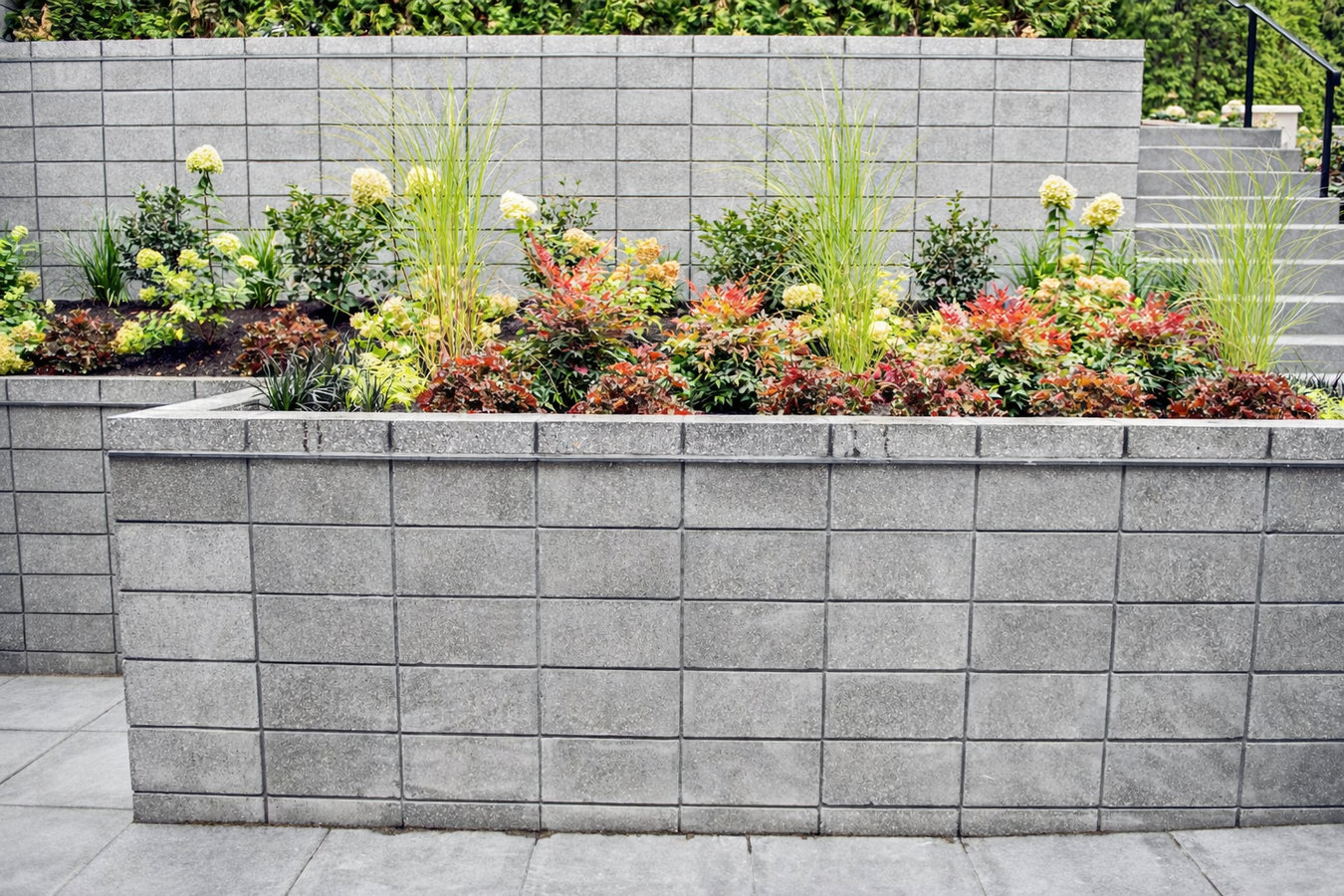
A leaning wall or one with crumbling mortar is not just an eyesore - it is a problem waiting to get worse. We build concrete block walls reinforced for Richmond's earthquake zone, with drainage designed for Bay Area clay soil and every permit handled from start to finish.
Concrete block walls in Richmond, CA are built by setting hollow or solid blocks in rows on a concrete footing, bonded with mortar and reinforced with steel rods grouted into the block cores, most residential walls of 20 to 40 feet take two to four days of active work once the permit is in hand.
The part you cannot see once the wall is done - the footing depth, the steel reinforcement, and the drainage behind a retaining wall - is what determines whether that wall is still standing straight in twenty years. In Richmond, where the ground moves with the seasons and the Hayward Fault makes seismic loading a real consideration, these details are not optional extras. A wall that looks solid from the outside but was built without reinforcement or drainage is often a bigger problem than the crumbling old wall it replaced.
If your project calls for a wall that will also serve as a structural boundary for a yard or garden, we can coordinate retaining wall construction as part of the same scope. The Concrete Masonry Association of California and Nevada sets regional standards for block wall construction that account for California's seismic zones and soil conditions - standards we follow on every project.
If your wall curves or tilts away from the soil it is holding back, that is a serious warning sign. In Richmond's clay-heavy soil, water pressure builds up behind retaining walls after wet winters, and a wall that leans is telling you it is losing the battle. A leaning wall is far cheaper to fix before it collapses than after.
Small surface cracks in mortar are normal as a wall ages, but cracks that run diagonally across multiple blocks, or gaps wide enough to fit a finger into, mean the wall's foundation or reinforcement has been compromised. In Richmond, where the ground shifts during earthquakes and clay soil expands and contracts seasonally, this kind of cracking tends to worsen quickly.
If soil is spilling out from behind the wall or water pools against it after rain, the drainage behind the wall has likely failed. Richmond's wet winters - typically November through March - put real pressure on retaining walls, and a wall without proper drainage will deteriorate faster than one built correctly. This is a sign to call someone before the next rainy season.
Many Richmond homes still have block walls from the postwar building boom, built before modern earthquake safety standards were in place. If your wall is more than 40 years old and has never been inspected, it is worth having a masonry contractor take a look - especially if it is a retaining wall holding back a slope.
Our concrete block wall work covers the full scope: site assessment and footing design, permit application with the City of Richmond, excavation, concrete footing pour, block laying with mortar joints checked for level and plumb throughout, steel rod and grout reinforcement inside block cores, and drainage installation behind any retaining wall. We build boundary walls, garden walls, and retaining walls for residential properties throughout Richmond and the East Bay.
When a project requires both block wall construction and structural foundation work in the same scope, we handle foundation block wall installation as a connected service. And if the finished wall will also support retaining wall functions - holding back a hillside or raised planting bed - we design the drainage and reinforcement system for that load from the start, not as an afterthought.
Right for homeowners who need a defined property line, a raised planting bed perimeter, or a clean separation between outdoor spaces - straightforward construction at a lower cost than retaining walls.
Suited to hillside properties or yards where soil needs to be held back - these walls require footings, drainage, and seismic reinforcement, and they must be permitted through the City of Richmond.
For Richmond homes with existing block walls from the 1940s through 1960s that are showing cracks, settling, or drainage failure - honest assessment of what needs repair versus full replacement.
Block wall construction as the structural base for raised outdoor living areas, patio borders, or stepped garden terracing on sloped Richmond lots where level space has to be built.
Richmond sits adjacent to the Hayward Fault, one of the most active fault zones in California. That seismic reality means every block wall built here - especially any wall that holds back soil or sits on a slope - needs to be reinforced with steel rods and concrete fill inside the block cores. This is not optional; it is what keeps the wall standing after an earthquake rather than cracking or toppling. Many of Richmond's older residential neighborhoods also sit on expansive clay soils that swell when wet and shrink when dry, which puts continuous pressure on retaining walls through every rainy season. A wall built without proper drainage behind it will start to lean or crack within a few years - sometimes sooner after an especially wet winter.
Richmond's significant share of homes built in the 1940s and 1950s means many properties still have original block walls from an era before modern seismic and drainage standards were in place. If you have a wall from that period, a professional assessment can tell you whether it needs repair, reinforcement, or full replacement. Homeowners in Hercules and Pinole face similar soil and seismic conditions - our team works across the East Bay and builds every wall to the same California standards.
We visit your property, assess the ground conditions, and talk through exactly what your project requires. You get a written quote that breaks out materials, labor, permit costs, and any drainage work needed - so there are no surprises after you sign. We reply to all requests within one business day.
For most block walls in Richmond, we apply for the building permit from the City of Richmond Building Services Division before work begins. Plan for one to three weeks for permit processing. We handle every step of this - you do not need to contact the building department yourself.
Once the permit is in hand, the crew marks the wall footprint, excavates to below the surface, and pours a concrete footing. This step typically takes a full day and is what gives the wall its structural base. Rushing or skipping it is one of the most common reasons older walls fail.
Blocks are laid row by row with mortar joints checked for level throughout. Steel reinforcement is installed inside block cores and filled with concrete grout as the wall rises. After the mortar sets, a city inspector signs off on the permitted work before the job is considered complete.
Free written estimate. No pressure. We reply within one business day.
(510) 660-6710Every block wall we build in Richmond includes the steel and grout reinforcement required for California's seismic zone. We do not offer unreinforced walls as a cheaper option - not in a city as close to the Hayward Fault as Richmond is. This is what a wall built for this area looks like.
Richmond's clay soils and wet winters put real pressure on retaining walls. We include drainage - aggregate backfill, drain pipe, or both - behind every retaining wall we build as a standard part of the scope. Water needs a way out; if it has nowhere to go, it eventually pushes the wall over.
We pull the City of Richmond building permit, coordinate the inspection, and hand you documentation of completed permitted work. You never deal with the building department, and you end up with a wall that is fully documented and protects your home's resale value.
Many Richmond properties have block walls from the 1940s through 1960s - some still sound, some quietly failing. We give you a straightforward assessment: what needs repair, what can be left alone, and what is a safety issue that needs addressing now. We are not going to tell you to replace a wall that has years of life left.
A concrete block wall built correctly in Richmond should last 50 years or more with routine maintenance. We build every wall with that lifespan in mind, because the cost difference between doing it right and doing it fast shows up within a few wet winters. The USGS documents the Hayward Fault's activity level - building for it is not overcaution, it is just good practice in this area.
Block wall installation at the foundation level where structural loads and soil contact require deeper footings and heavier reinforcement than standard boundary walls.
Learn MorePurpose-built retaining walls for hillside lots and raised outdoor spaces in Richmond, designed with drainage systems to handle Bay Area clay soils and wet winters.
Learn MoreSpring and summer book up fast - reach out now for a free written quote and we will tell you exactly what your project requires, including permits and drainage.